Blog
Porcelain vs Natural Stone Patios in Ireland – Which Is Better in 2026?
By admin ·
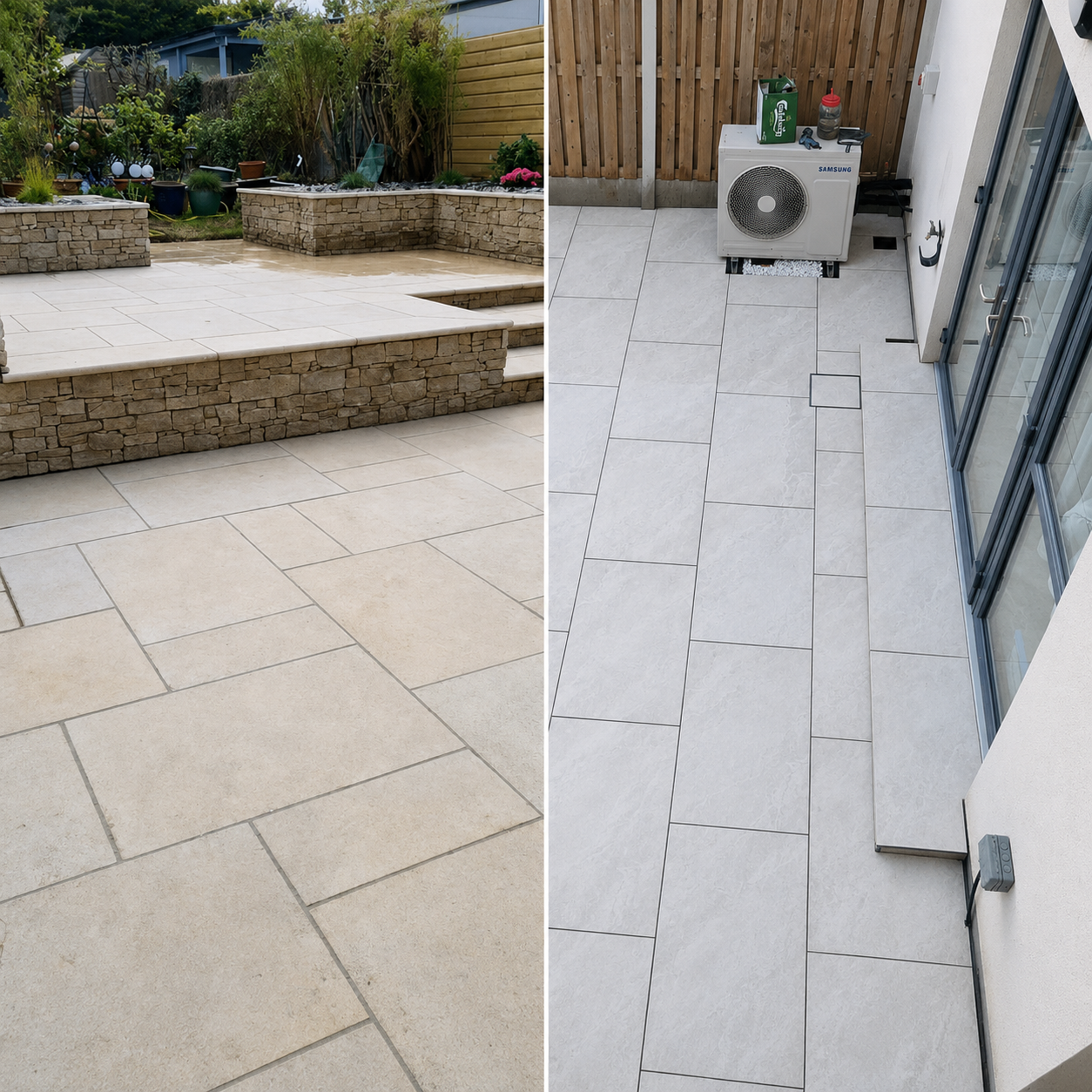
Introduction
Choosing the right patio material is one of the biggest decisions homeowners make when upgrading their outdoor space. In Ireland, porcelain and natural stone are two of the most popular premium patio options, but they both have major differences in appearance, maintenance, durability, and long-term upkeep.
At A1 Construction, we regularly install both porcelain and natural stone patios across Dublin, Meath, and Louth. While both materials can create beautiful outdoor spaces, the right choice often depends on the homeowner’s style preferences, maintenance expectations, and the conditions of the garden itself.
In this guide, we explain the real-world differences between porcelain and natural stone patios in Irish weather conditions.
What Is Porcelain Paving?
Porcelain paving is a manufactured outdoor tile designed specifically for patios and external spaces. It has become extremely popular in Ireland over the last few years due to its modern appearance, low maintenance requirements, and strong resistance to moisture and staining.
Unlike natural stone, porcelain absorbs very little water. This makes it much more resistant to algae growth, dirt penetration, and staining in wet Irish conditions.
Porcelain is also available in a huge range of colours, finishes, and sizes, making it suitable for both modern and traditional garden designs.
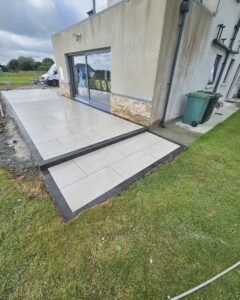
Modern porcelain paving with large-format outdoor slabs.
What Is Natural Stone?
Natural stone paving includes materials such as sandstone, limestone, granite, and slate. Many homeowners choose natural stone because of its unique character, colour variation, and more traditional appearance.
Unlike porcelain, every natural stone slab is slightly different, which creates a more organic and natural-looking finish.
However, natural stone is generally more porous than porcelain. In Ireland’s damp climate, this means the material can absorb more moisture, algae, and dirt over time if not properly maintained.
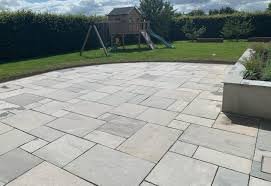
Traditional natural stone paving used in an Irish garden project.
Which Patio Material Requires Less Maintenance?
For many homeowners in Ireland, maintenance becomes one of the biggest deciding factors between porcelain and natural stone.
Porcelain patios are generally easier to maintain because the material absorbs very little water. Dirt, algae, and moss usually remain on the surface rather than penetrating into the slab itself. This makes porcelain easier to clean and better suited for damp or shaded gardens.
Natural stone can require more ongoing maintenance, especially in areas exposed to constant moisture or limited sunlight. Some types of stone may benefit from sealing to help reduce water absorption and staining over time.
Porcelain is also generally more resistant to stronger cleaning products when used correctly, while certain natural stones can become damaged or discoloured if harsh chemicals are used incorrectly.
Another important difference is how the materials age over time. While porcelain usually keeps its cleaner appearance for longer, chips or edge damage can sometimes be more noticeable depending on the tile itself.
Natural stone often hides smaller marks or chips better because the colour and texture run more naturally throughout the slab. Many homeowners actually prefer this more weathered and natural appearance over time.
How Do Porcelain and Natural Stone Perform in Irish Weather?
Ireland’s wet climate plays a major role in how patios perform over time. Rain, shade, algae growth, and poor drainage can all affect the appearance and safety of outdoor paving.
Porcelain patios are often chosen for modern Irish gardens because they absorb very little moisture, making them easier to keep clean in damp conditions. Many outdoor porcelain slabs also include textured anti-slip finishes designed specifically for external use.
Natural stone can also perform extremely well outdoors when installed correctly, but because it is generally more porous, some materials may become darker, absorb moisture, or develop algae more easily in shaded areas.
Regardless of the material chosen, proper drainage and groundwork preparation are critical for long-term performance in Irish weather conditions.
At A1 Construction, we always stress that the preparation underneath the patio is just as important as the paving material itself. Poor groundwork, drainage, or installation methods can cause problems regardless of whether porcelain or natural stone is used.
Are Porcelain and Natural Stone Installed Differently?
While porcelain and natural stone patios may look very different once completed, the installation process underneath is actually very similar.
Both materials require proper excavation, a solid hardcore base, correct compaction, drainage planning, and a strong bedding layer to ensure long-term durability.
Porcelain paving is generally less forgiving during installation because the slabs are usually perfectly straight and uniform. This means the groundwork and laying process must be extremely accurate to achieve a clean finish.
Natural stone can sometimes appear more forgiving visually because of its more natural texture and variation, but proper preparation is still essential for both materials.
For porcelain patios especially, proper slurry priming and adhesion methods are extremely important. Incorrect installation can eventually lead to loose slabs, movement, or drainage problems regardless of the quality of the paving itself.
What About Jointing and Grout Maintenance?
Jointing and grout maintenance are often overlooked when comparing porcelain and natural stone patios, but they can make a major difference over time.
Both patio types require proper jointing to help prevent movement, water penetration, and weed growth. However, because porcelain patios are usually installed with cleaner and more consistent lines, poor jointing workmanship can become far more noticeable visually.
Natural stone patios can sometimes hide minor imperfections more naturally due to their texture and variation.
In Ireland’s wet climate, the quality of the jointing compound and drainage is extremely important for long-term durability regardless of the paving material chosen.
From our experience, high-quality flowable grout systems such as Flowpoint and similar products often perform extremely well for both porcelain and natural stone patios. Because the grout is applied in a wet, flowable form, it can penetrate deeply into joints and smaller gaps, helping create a stronger and more consistent finish.
Cement-based flowable grouts are also generally very durable when it comes to long-term maintenance and power washing. However, depending on the product used, colour choices can sometimes be more limited within the Irish market compared to traditional grouting systems.
In recent years, epoxy grout systems have also become increasingly popular, especially for porcelain paving. Epoxy-based products are known for their strong resistance to staining, discoloration, moisture absorption, and chemical exposure, making them an attractive low-maintenance option for modern outdoor spaces.
Which Patio Material Costs More?
The overall cost of a patio project depends on far more than just the paving material itself. Access, drainage requirements, garden levels, design complexity, and groundwork all play a major role in final pricing.
In general, both porcelain and natural stone are considered premium patio options in Ireland. Large-format porcelain slabs can sometimes increase labour costs due to the precision required during installation and handling.
Natural stone pricing can also vary significantly depending on the type of stone selected and the level of finishing required.
For most projects, the quality of the installation is far more important than choosing the cheapest material available.
So Which Patio Material Is Better?
There is no single “best” patio material for every garden or homeowner. Both porcelain and natural stone can create beautiful outdoor spaces when installed correctly using proper groundwork and drainage methods.
Porcelain is often the preferred option for homeowners looking for a modern appearance with lower long-term maintenance. Its low water absorption, easier cleaning, and consistent finish make it especially popular in modern Irish garden designs.
Natural stone remains an excellent choice for homeowners who prefer a more traditional, organic, and natural appearance. Many people appreciate the character, texture, and variation that natural stone develops over time.
In most cases, the long-term performance of any patio depends far more on the quality of the installation than the material itself.
Thinking About Installing a New Patio?
At A1 Construction, we specialise in complete outdoor transformations including patios, pergolas, drainage, landscaping, fencing, and groundwork across Dublin, Meath, and Louth.
Whether you are considering porcelain or natural stone paving, we can help design and install a patio that suits your garden, maintenance expectations, and budget.
If you are planning a patio project in Ireland, feel free to contact our team for advice or a quotation.